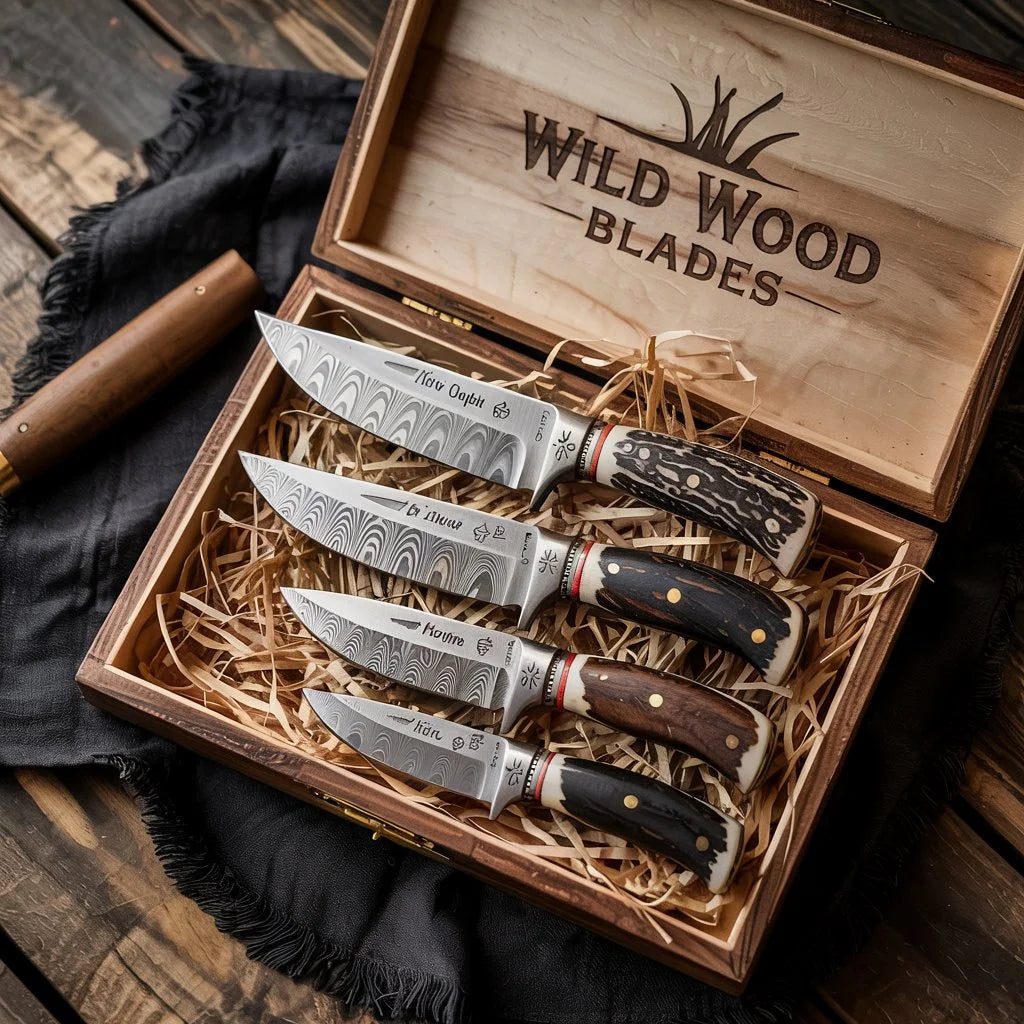



How many types of blades are there?
When it comes to kitchen knives, each blade is crafted with a purpose. Whether you are working in a professional kitchen or preparing yourself a dinner, knowing which blade suits your task can make an obvious difference.
Japanese craftsmanship has deeply influenced the modern knife market. Blades like the santoku, nakiri, gyuto, deba, and yanagiba are not only elegant in form but also precise in function. These traditional styles have earned a respected place alongside Western counterparts, offering a dynamic range of tools for any cook.
Specialty knives also come in various shapes, including clip point, drop point, tanto, sheepsfoot, and trailing point designs. From the everyday chef’s knife to more focused tools like paring knives, cleavers, and utility blades, each brings something unique to the cutting board. Serrated edges, for example, are ideal for slicing through crusty bread or delicate produce skins without crushing.
Exploring the different blade types opens up possibilities in the kitchen. Knowing how each one works can help home cooks and professionals alike work more efficiently and enjoyably, matching the right tool to every task with confidence.
Core Blade Categories
Knowing how blade profiles differ reveals two primary schools of thought in knife making. Every approach brings its own set of advantages shaped by technique, materials, and history.
Western Blade Designs
Western-style knives concentrate on strength and durability. They tend to be heavier and feature curved edges, with a double-bevel edge that handles a wide range of cutting jobs. This type of build gives balance and control, ideal for long hours in busy kitchens.
The thicker spine and wider blade make these knives excellent for tougher tasks, like breaking down meat or working through thick ingredients. Stainless steel is often used here, offering rust resistance and ease of maintenance, especially in professional settings.
Japanese Blade Craftsmanship
On the other side, Japanese knives take a more delicate approach, prioritizing sharpness and control. These blades are usually thinner and lighter, which makes them great for tasks that demand accuracy. Some styles use a single bevel, allowing for extremely fine, precise cuts.
Carbon steel is commonly found in traditional Japanese knives, though newer styles now incorporate stainless or powdered steels for easier upkeep. While these blades may require more care, their sharpness makes them favorites among chefs focused on technique.
The legacy behind these knives runs deep. They aren’t just tools, they’re part of a heritage that brings elegance and skill into daily cooking.
Every day Essential Blades
Every kitchen relies on three key tools to manage most daily cutting jobs. These core blades support efficient food prep across different types of meals.
The All-Purpose Powerhouse: Chef's Knife (Gyuto)
The Chef's knife is a true workhorse in the kitchen, perfect for tasks like chopping vegetables or slicing proteins. Western versions usually have a curved belly, permitting for a rocking motion when slicing. The Gyuto, a Japanese counterpart, has an outstanding edge retention and flatter edge.
This Japanese style gives added precision without losing overall usefulness. Its thinner build makes clean cuts easier, especially with delicate foods, while still being strong enough for heavier prep tasks.
Precision Control: Paring Knife (Petty)
A Paring knife is great for work that requires accuracy and control. Its small size is ideal for peeling, trimming, and doing detail work like deveining shrimp. The Petty knife, the Japanese version, offers the same versatility with sharper angles and high-quality materials.
Its shorter blade helps with tasks where fine cuts matter, like making decorative garnishes or removing imperfections from fruits and vegetables. It helps reduce waste and keeps your dishes looking sharp.
Specialized Cutting: Serrated/Bread Knife
The Serrated knife stands out thanks to its jagged edge that grips tough surfaces. It's great for cutting crusty bread without crushing the soft inside. It also works well with foods like tomatoes and citrus fruits.
Even if the blade becomes slightly dull, those teeth keep working. That makes this knife very reliable for tough jobs, while also being easy to care for.
Specialized Vegetable Blades
Preparing vegetables requires precision tools crafted specifically for clean, efficient cuts. These expertly designed knives enhance plant-based cooking by catering to the textures and shapes of various produce.
The Versatile Santoku
Santoku knives combine balance and efficiency with a flat blade profile that supports push cutting techniques. Unlike curved Western blades, the Santoku’s straight edge remains in contact with the cutting board, producing consistent slices across vegetables of all kinds.
Many Santoku models include granton edges, small indentations along the blade, that help reduce friction while cutting. These features prevent food from clinging to the metal, which keeps slicing motions smooth even with moist or sticky ingredients like zucchini or eggplant.
Double-Bevel Nakiri Excellence
The Nakiri is known for its sleek, rectangular blade and is a favorite for vegetable preparation. With its double-bevel design, this knife delivers even, controlled cuts through everything from carrots to leafy greens. Its wide shape provides ample knuckle clearance, allowing for rapid chopping without interference or discomfort.
Designed for those who cook with vegetables often, the Nakiri keeps slices clean without bruising delicate herbs or crushing root vegetables. Its shape also makes it easy to transfer chopped items from board to bowl or pan.
Professional Usuba Precision
The Usuba is a traditional Japanese knife renowned for single-bevel craftsmanship. This design gives it exceptional accuracy, ideal for chefs who require perfect, thin slices for garnishes or decorative plating. Unlike the Nakiri, which is more forgiving, the Usuba requires skill to maintain its sharp edge and proper form.
Though it demands more attention and care, the Usuba excels at high-level culinary tasks. From shaving radishes into translucent sheets to shaping produce for artistic displays, it brings refined control to anyone who’s mastered its use.
Protein-Focused Blades
Working with proteins demands specialized tools engineered to handle a variety of cutting challenges. These knives are crafted to meet specific needs, from efficiently breaking down whole fish to achieving ultra-thin slices of cooked meats.
The Powerful Deba
The Deba is a powerhouse in traditional Japanese kitchens, designed for heavy-duty fish and poultry preparation. Its thick spine and single-bevel edge provide the strength needed to cut through small bones and joints with ease. Ideal for whole fish processing, the Deba enables chefs to maintain both control and precision during breakdown tasks.
Flexible Boning Solutions
Boning knives are designed with flexibility in mind, allowing them to maneuver around bones and joints with accuracy. Their slim, agile blades help separate meat from the bone efficiently, minimizing waste while increasing yield. Whether working with beef, pork, or poultry, these knives offer precise control in tight areas, making them indispensable for butchery work.
Delicate Fish Processing
The Fillet blade shines when working with delicate proteins such as fish. Its pliable, thin blade follows bone forms effortlessly, assisting in preserving the integrity of tender meat. With its exceptional control, this tool ensures smooth, clean fillets and is a must-have for anyone preparing seafood regularly.
Precision Slicing Excellence
Long, narrow blades like the Yanagiba and Sujihiki are known for their exceptional slicing capabilities. These knives are designed to deliver clean, uninterrupted cuts across cooked meats, roasts, or raw fish such as sashimi. By gliding through proteins without crushing or tearing, they help preserve the texture and presentation of each slice. Their extended blade length and sleek geometry are essential for those seeking flawless plating results.
Utility and Specialty Blades
Not every kitchen task can be handled by a standard knife. That’s where utility and specialty blades come in. These knives are designed to tackle more specific or unusual tasks that demand precision, strength, or unique blade features.
The Versatile Utility Solution
The utility blade fills the central ground between a small paring knife and a large chef’s knife. With its moderately sized and compact blade, it shines throughout tasks that need finesse without giving away power. It’s the go-to tool for trimming vegetables, cutting fruits, slicing meats for sandwiches, or tackling medium-sized food prep jobs. This knife offers flexibility and efficiency when you don’t want to reach for a bulky blade or fumble with one that’s too small.
Power Through Tough Tasks
For jobs that demand raw force, the cleaver is unmatched. There are different styles of cleavers, with Chinese cleavers being much more versatile than their Western counterparts. While meat cleavers are made for breaking through bones and joints, the Chinese cleaver handles everything from crushing garlic to scooping diced ingredients off the cutting board. Its wide blade is a multitasker, ideal for chopping, smashing, and even serving.
Targeted Task Solutions
Then there are knives made with one job in mind. Specialty blades focus on tasks where precision and control are crucial. Cheese knives, for example, come with holes or ridged edges that stop the cheese from sticking. Tomato knives feature serrated edges that bite into soft skin without turning the flesh into mush. Other task-specific knives are made for everything from deveining shrimp to carving melons or slicing citrus.
These kinds of knives might not be part of every home kitchen, but in professional environments, or for cooks who value speed, accuracy, and presentation, they’re incredibly valuable. When used properly, these specialty tools streamline the workflow and deliver better results than general-purpose knives ever could.
Blade Shapes and Edge Types
The edge and shape of a blade play a huge role in how efficiently it performs in your kitchen. From clean cutting to tackling tough-skinned ingredients, every design element is carefully constructed to suit a specific type of cutting job.
Bevel Construction Types
Blades come with different bevel constructions that affect how they cut and how they feel in the hand.
- Double Bevel: This common design features symmetrical edges on both sides of the blade. It's ideal for everyday use because it offers balance, control, and ease of sharpening. Most home cooks find double bevel knives easier to use since they accommodate both left- and right-handed users.
- Single Bevel: Found mostly in professional and traditional Japanese knives, single bevel blades are sharpened on only one side. This creates an extremely sharp edge, perfect for precision work like sushi or intricate vegetable cuts. However, they demand greater skill and are usually tailored to right-handed users unless specially made.
The angle of the edge also matters. Blades with a sharper (more acute) angle can slice more cleanly but tend to lose their edge faster. In contrast, wider angles offer greater durability, which is helpful for heavier use.
Edge Design Variations
Edge designs determine how a blade interacts with food, especially when working with different textures.
- Straight Edge: These are great for making clean, even cuts through ingredients like meat, vegetables, and herbs. They glide easily and are ideal for push or pull cuts where precision matters.
- Serrated Edge: Perfect for tough or slippery surfaces like bread crusts, citrus peels, or tomatoes. The teeth on the edge grip the surface and make it easier to saw through without squashing the inside. While the serrated edged blades hold sharpness for longer period, they are harder to sharpen than the straight edges.
- Granton Edge: These blades have small oval-shaped indentations along the side. These air pockets decrease friction, assisting food slide off the blade more simply. It is particularly useful when slicing sticky or moist ingredients such as roasted meats, raw fish, or cheese.
Performance Impact
Each edge style is designed with a specific purpose in mind.
- Straight edges offer maximum control and clean slicing but need regular sharpening to stay effective.
- Serrated edges are low-maintenance and ideal for specific textures but are limited in versatility.
- Granton edges give the benefit of clean slicing with reduced sticking, making them a great hybrid option for a variety of kitchen tasks.
Choosing the right blade shape and edge style can elevate your food prep experience, whether you're making delicate cuts or handling tougher ingredients. Understanding these options ensures better results and a smoother workflow in the kitchen.
Choosing the Right Blades for Your Needs
When selecting a blade, consider what you cut most frequently. Different ingredients call for specific designs to perform optimally in everyday use.
Understanding User Requirements
The needs of home cooks differ from those of professional chefs. Instead of depending on a multi-purpose, single knife, it is frequently better to have some specialized ones. Think about your cooking practices, how and where you will be utilizing every knife, and select styles and shapes accordingly.
Essential Starter Collections
If you're just starting out, prioritize versatility. Look for beginner-friendly knives made by trusted knife makers. A solid foundational knife set often includes a chef’s knife, utility knife, and a paring blade.
Western knives are typically more robust and forgiving, ideal for general tasks. Japanese knives, however, are recognized for their superior precision and sharpness. Western blades typically have a curved edge that helps rocking motions, while Japanese knives like santokus and nakiris feature straighter profiles perfect for vertical chopping.
Smart Selection Factors
Concentrate on quality rather than quantity. Some well-crafted blades will outdo a drawer full of cheaper ones. Select knives that you will reach for frequently and that feel comfortable in the hand.
Match your cutting technique to the blade’s construction. For instance, thinner edges are excellent for clean, delicate slices, while thicker, reinforced tips handle tougher jobs. Premium knives are worth the investment, they offer better control, stay sharp longer, and hold up beautifully with regular use.
Caring for Diverse Blade Types
Maintaining the knives appropriately makes sure that they last longer and perform at their best. Every knife material needs precise care to keep it effective, safe, and sharp.
Material-Specific Maintenance
Japanese high-carbon steel knives are unbelievably sharp but more prone to corrosion. Always dry them immediately after use to prevent corrosion. In contrast, stainless steel knives are more resistant to rust but still benefit from prompt cleaning and drying.
Evade dishwashers for any blade. The harsh detergents and high heat can damage both the handle and the blade. Instead, clean them by hand utilizing a soft sponge or cloth and mild soap.
Sharpening Techniques
Utilize the correct sharpening tools for every type of knife. Water stones (also known as whetstones) are ideal for harder steels and help maintain the precise angle needed for sharp edges. For softer steels, Western-style sharpening systems may be more suitable.
Choose the correct sharpening stone grit based on the level of wear on the blade. Regular maintenance using a honing rod or a leather strop helps keep the edge aligned and extends the time between full sharpenings.
Storage Solutions
Proper knife storage protects the blade edge and helps avoid accidents. Knife blocks, magnetic wall strips, and blade guards are all effective options. Never store your blades loosely in drawers, as it can cause knives to dull fast or even cause injury.
Conclusion
Recognizing the extensive range of knife types makes it obvious that no single knife can do it all. Choosing the right knife for each task impacts not only your results in the kitchen but also your safety and overall enjoyment while cooking.
Core kitchen knives are essential, but adding specialized blades to your collection greatly enhances your ability to handle more complex or ingredient-specific tasks. From prepping herbs with finesse to tackling tougher cuts of meat, each knife brings its own value to the table.
Taking care of the blades is just as vital as selecting them. With good cleaning, storage, and sharpening, the knives can stay dependable and sharp for years, whether they are durable Western designs made for heavy use or high-precision Japanese styles.
Start with a few quality essentials and add to your collection over time based on your cooking habits and needs. A good chef’s knife, paring knife, and utility blade can cover most daily prep, while specialty knives help refine techniques and handle unique ingredients with ease.
Using the right knife for each job turns meal prep into a more enjoyable, creative process. With the right tools in hand, you’ll find that cooking becomes more efficient, precise, and rewarding as your skills grow.